If you’re like us and living on a regular urban section, you’ll know that there is no way to get 100% of your families food requirements from a small urban section. Though you can get pretty close! 9-10 months a year we get basically 100% of our fruit requirements from our urban garden, and we’re working on getting this to 12 months a year – and if you’ve got toddlers or young children, you’ll know that’s a LOT of fruit!
We’re also working on more vegetable production, but this is generally limited more by time with small children than space.
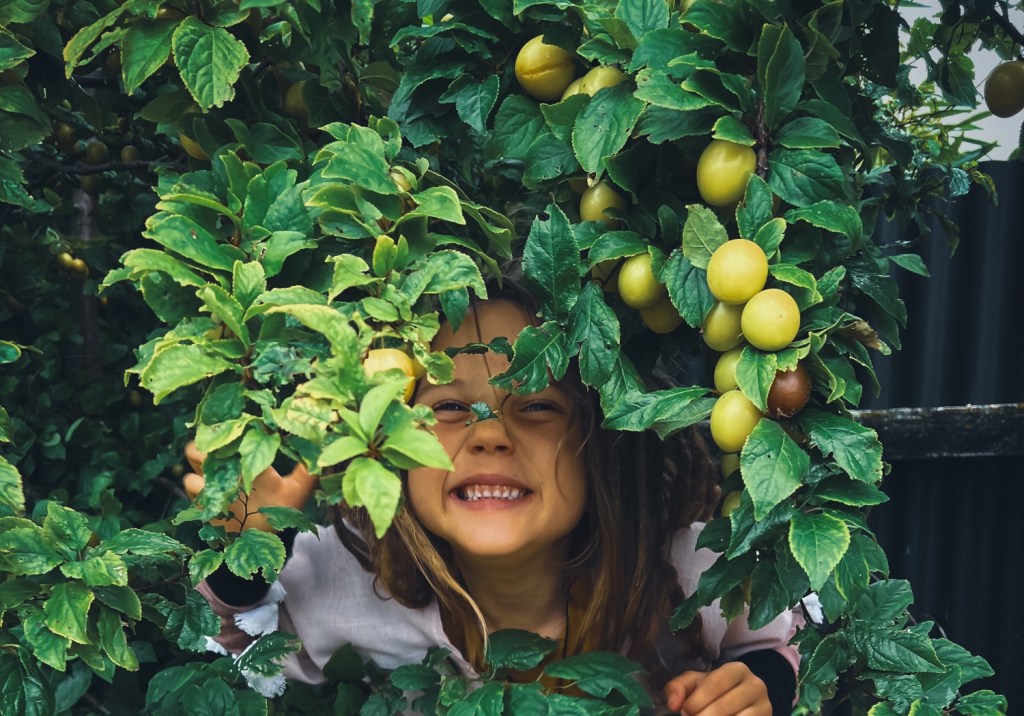
- Go foraging
Whenever you head out for a walk or a drive, keep an eye out for food! You’d be surprised how much food is actually around when you start looking for it. From roadside apple trees to edible weeds at the local park.
If you’re in Christchurch, you can also check out the Christchurch City Council fruit trees map, which makes starting your search much easier.
This map is also a national New Zealand version where people can add trees, herbs, community gardens, community pantries, etc.
2. Go hunting and / or fishing
Just because you don’t have enough space to raise your own meat doesn’t mean you can’t get your own meat.
We don’t tend to buy meat (except for occasional chicken for a change) as all our meat is venison hunted by hubby. We don’t have the space for any cows, but this way we can still get free-range organic meat from outside of the supermarket.
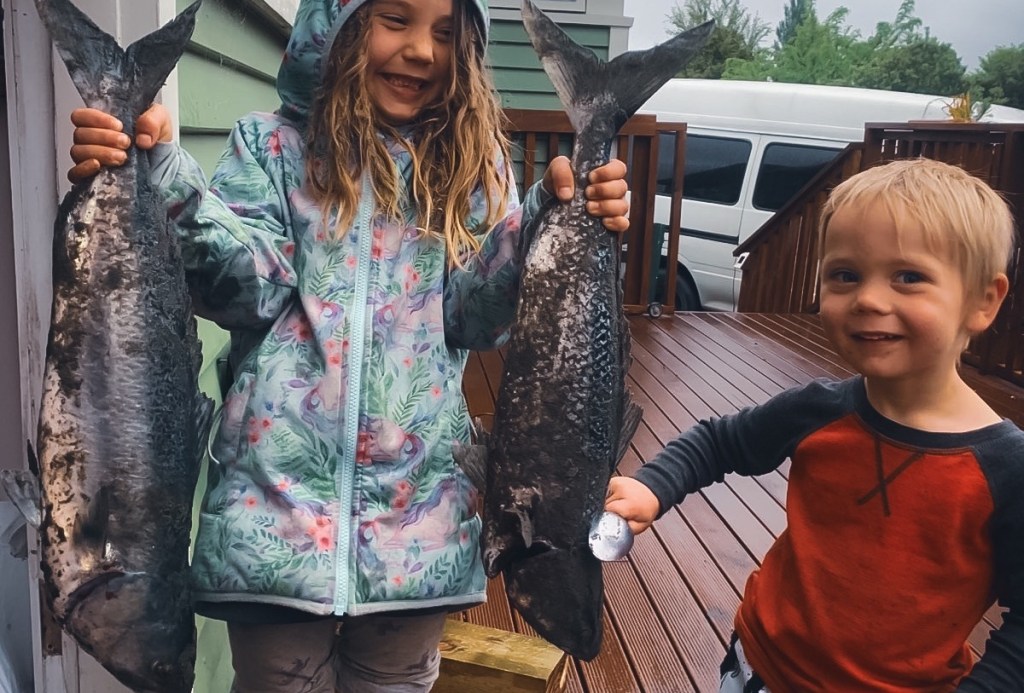
Fishing is great too as the kids love it, and it’s a great way for hubby and the kids to head out while I can do something else, and they come back with food!
3. Make friends with neighbours with fruit trees
I’m always surprised at how many local gardens have fruit trees, but the owners of the fruit tree will still go buy fruit at the supermarket instead of using what they have.
If you see a ripe fruit tree and knock and ask, most people are more than happy for you to grab a few! Some people will in fact tell you to take the lot as they don’t want to deal with it.
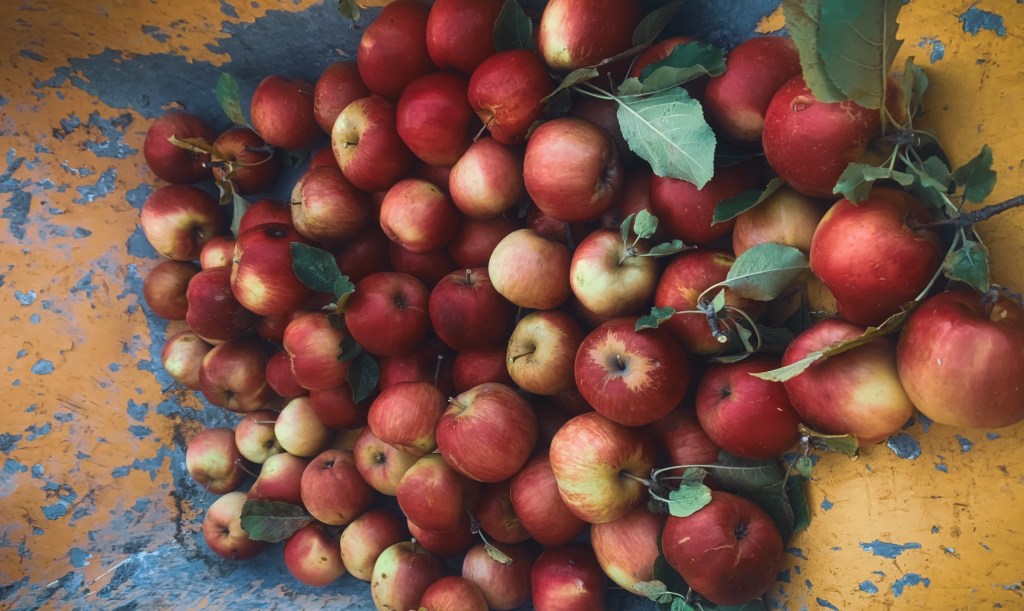
We used to harvest one of our neighbours apples off their tree and get a few wheelbarrows full for preserving. We would then get some walnuts from the neighbours on the other side, and I would bake an apple walnut and rhubarb from our own garden cake to share with the neighbours we got the goods from. Called it the neighbour cake!
Unfortunately the apple tree has since died, but it tied us through till our tree grew enough to get apples of our own. And also helped us with learning how to preserve our harvests.
4. Barter what you can grow
If you’re an awesome plum grower, swap those plums for some tomatoes. If you’re a great pumpkin grower, swap those pumpkins for some eggs!
This isn’t just limited to what you can grow in your garden either! It could include your skills, or your time.
For example, you could get a bunch of apples off a friend or neighbour, and swap them some veggie seedlings or sewing. If you get milk from someone, you could make some milk soap in return. Or whatever your skill is, make use of it instead of a financial trade.
Afterall, it is actually community sufficiency, not self sufficiency, that makes the world go round.
 Urban Self Sufficiency NZ
Leave a comment